 Login
 Please specify the quantity of product(s).

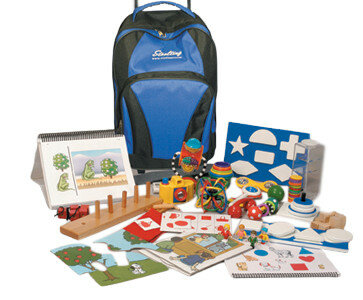
Merrill-Palmer-Revised Scales of Development MPR
The Merrill-Palmer–Revised (MPR) is a comprehensive early childhood developmental assessment designed to evaluate cognitive, language, motor, and socioemotional functioning, as well as adaptive behavior, for the early identification of developmental delays and learning difficulties.
| Item | Product | Price | QTY |
|---|---|---|---|
| 37064 | Merrill-Palmer Scale-Revised | $1,195.00 | |
| 37064M | M-P-R Manual | $75.00 | |
| 37064C | M-P-R Cognitive Battery Record Forms, Pk/20 | $50.00 | |
| 37064G | M-P-R Gross Motor Record Form, Pk/20 | $30.00 | |
| 37064-SA | M-P-R Copying Response Sheet A, Pad of 20 | $9.00 | |
| 37064-SB | M-P-R Copying Response Sheet B, Pad of 20 | $9.00 | |
| 37064-DP | M-P-R Social Emotional Development Parent Scale, Pk/20 | $19.00 | |
| 37064-TP | M-P-R Social EmotionalTemperament Style-Parent Pk/20 | $19.00 | |
| 37064-HP | M-P-R Self-Help/Adaptive Development Scale-Parent pk/20 | $19.00 | |
| 37064-LP | M-P-R Expressive Language Parent Frm, Pk/20 | $19.00 | |
| 37064-LR | M-P-R Expressive Language Evaluator Forms, Pk/20 | $19.00 | |
| 37064-PF | M-P-R Summary Report/Growth Score Profile pk/20 | $30.00 | |
| 37064-DPS | M-P-R Spanish S.E.Development Parent Scale, Pk/20 | $29.00 | |
| 37064-TPS | M-P-R Spanish S.E.Temperament Style-Parent Pk/20 | $30.00 | |
| 37064-HPS | M-P-R Spanish Self-Help Parent Report Forms, Pk/20 | $30.00 | |
| 37064-VD | Merrill-Palmer-R Training Video, DVD format | $90.00 | |
| 37064-EB | Merrill-Palmer Revised Easel Book | $300.00 | |
| 37064D | Rolling Case/Backpack | $105.00 |
 Add to Cart

Merrill-Palmer — Revised Scales of Development (MPR)
Meets the needs of infant and early childhood assessment to evaluate cognitive, language, motor, and social-emotional development, as well as adaptive behavior, for the early identification of developmental delays and learning difficulties.
By Gail H. Roid, Ph.D., and Jackie L. Sampers, Ph.D.
| Age Range: | 1 month - 6.5 years |
| Time: | Approximately 45 minutes |
| Qualification Level: | B |
| Format: | Paper-and-pencil; individual administration; caregiver report |
| Benefit: | Assess Cognitive, Language, Motor, and Social-Emotional Development, and Adaptive behavior |
The Merrill-Palmer–Revised (MPR), published by Stoelting, is a comprehensive assessment of infant and early childhood development for children from 1 month to 6½ years of age. Designed to follow the natural progression of early developmental milestones, the MPR is particularly useful for evaluating children born preterm. Through engaging, hands-on, toy-based activities, the assessment measures cognitive, language, motor, and social-emotional development using safe, colorful materials that help create a positive assessment experience for both children and examiners.
Meets the Requirements of IDEA Legislation with separate scores within each IDEA domain, as well as yielding a global score:
The Merrill-Palmer-R provides normative standard scores, percentiles, age equivalents and criterion-referenced, change-sensitive “growth scores” for the five IDEA domains:
- Cognitive Development — Verbal and Nonverbal Reasoning, Memory, Visual Motor and Speed of Processing
- Language/Communication Development — Receptive and Expressive Language, evaluated by Examiner and Parent
- Motor Development — Fine Motor and Gross Motor
- Social-Emotional Behavior — Developmental Scale and Clinical Data, rated by Examiner and Parent
- Self-Help/Adaptive Behavior — Developmental and Global Examiner and Parent Rating Scales
Addresses Five Major Assessment Needs
- Early identification of developmental delays
- Change-sensitive assessment of premature infants
- Measurement of incremental improvement in development
- Reliable and valid developmental assessment for children with limited expressive language ability
- Comprehensive assessment required by IDEA, to develop Individual Family Service Plans (IFSP) and Individual Education Plans (IEP)
Recommended uses for the Merrill-Palmer-R
- Developmental assessment of Cognitive, Language/Communication, Motor, Self-Help and Social-Emotional Domains, required by federal and state regulations
- Assessment of general cognitive development in English- and Spanish-speaking children
- Screening of infants and children who have been referred for the evaluation of possible developmental delays or disabilities
- Assessment of children with hearing impairments/deafness, autism or other disabilities with limited language skills
- Re-evaluations of individuals previously identified as “developmentally delayed”
The Merrill-Palmer-R Growth Score Profile allows the examiner to plot scores of individual Developmental Index domains, relating them to Age Equivalence, and across Developmental domains. Once these scores are plotted, specific areas of deficit can be identified using test item performance, relative to expectations. These results can then be used to develop an educational plan targeting those deficits.
Number of Items in Assessments of Early Childhood Development
| Merrill-Palmer-R | Mullen | Bayley-4 | Battelle |
|---|---|---|---|
| Cognitive (111*) | Visual Reception (33) | Cognitive (81) | Cognitive (105) |
| Gross Motor (75) | Gross Motor (35) | Gross Motor (58) | Motor (100) |
| Fine Motor (59) | Fine Motor (51) | Fine Motor (46) | |
| Language (140) | Language (98) | Language (79) | Communication (85) |
| Self-Help/Adaptability (44) | Adaptive Behavior (120) | Adaptability (60) | |
| Social/Emotional (37) | Social-Emotional (35) | Personability & Sociability (100) | |
| Total = 466 | Total = 217 | Total = 419 | Total = 450 |
*Overall cognitive index across scales = 238
Valid and Reliable
The MPR has excellent reliability. Internal consistency for the Developmental Index is .97-.98, with other developmental scales ranging from .87-.97. Scale information curves are provided. Validity data includes extensive content-related, criterion related and consequential validity studies. The test is a good fit to the Rasch Model, and expert evaluations supported the content structure. The Developmental Index correlates .92 with the Bayley Mental Scale, even higher with the Leiter-R, and .80-.86 with the SB-5 abbreviated battery.
The Manual provides national norms based on nearly 1,400 cases (over 200 atypical), corresponding to the 2000 Census for gender, ethnicity, socioeconomic level and geographic region.
Purchasing Information:
The complete Merrill-Palmer — Revised Kit (37064) includes the comprehensive Manual, Infant Stimuli book, Easel Book, Fido Book, Choke-Safe Toys and Manipulatives, and all forms (MPR Cognitive Battery Record Forms, Pk/20; MPR Social Emotional Development Parent Scale, Pk/20; MPR Gross Motor Record Forms, Pk/20; MPR Copying Response Sheet A, Pad of 20; MPR Copying Response Sheet B, Pad of 20; MPR Self-Help/Adaptive Development Scale-Parent Pk/20; MPR Expressive Language Parent Forms, Pk/20; MPR Expressive Language Evaluator Forms, Pk/20; MPR Summary Report/Growth Score Profile Pk/20; MPR Social Emotional Temperament Style Parent Pk/20) in a convenient Rolling Bag.
MPR Kit includes forms in English only. The following forms in Spanish are sold separately:
- 37064DPS MPR Spanish Social Emotional Development Parent Scale, Pk/20
- 37064TPS MPR Spanish Social Emotional Temperament Style-Parent, Pk/20
- 37064HPS MPR Spanish Self-Help Parent Report Forms, Pk/20
Need replacement manipulatives? Contact us at: Psychtests@stoeltingco.com
Literature Involving the Merrill-Palmer — Revised
Alcantud, F., & Alonso, Y. (2016). Predictive value of the Merrill-Palmer-R Scale applied during the first year of live. Psicología Educativa, 22(2), 87–92. https://doi.org/10.1016/j.pse.2016.01.001
- The authors examined how well MPR scores obtained during the first year of life predicted later developmental difficulties in a sample of 291 infants.
Bennett, T. A., Szatmari, P., Georgiades, K., Hanna, S., Janus, M., Georgiades, S., Duku, E., Bryson, S., Fombonne, E., Smith, I. M., Mirenda, P., Volden, J., Waddell, C., Roberts, W., Vaillancourt, T., Zwaigenbaum, L., Elsabbagh, M., Thompson, A., & The Pathways in ASD Study Team. (2014). Language impairment and early social competence in preschoolers with autism spectrum disorders: A comparison of DSM-5 profiles. Journal of Autism and Developmental Disorders, 44(11), 2797–2808. https://doi.org/10.1007/s10803-014-2138-2
- The researchers used the MPR as an estimate of overall cognitive ability in a study comparing early social competence across groups of preschoolers with autism spectrum disorder.
Fulton, M. L., & D’Entremont, B. (2013). Utility of the Psychoeducational Profile-3 for assessing cognitive and language skills of children with autism spectrum disorders. Journal of Autism and Developmental Disorders, 43(10), 2460–2471. https://doi.org/10.1007/s10803-013-1794-y
- The authors used the MPR as a comparison measure when evaluating the Psychoeducational Profile-3 (PEP-3) in young children with autism spectrum disorders.
Georgiades, S., Szatmari, P., Duku, E., Zwaigenbaum, L., Bryson, S., Roberts, W., Fombonne, E., Mirenda, P., Smith, I., Vaillancourt, T., Volden, J., Waddell, C., Thompson, A., & Pathways in ASD Study Team. (2011). Phenotypic overlap between core diagnostic features and emotional/behavioral problems in preschool children with autism spectrum disorder. Journal of Autism and Developmental Disorders, 41(10), 1321–1329. https://doi.org/10.1007/s10803-010-1158-9
- The authors used the MPR a measure of developmental functioning in a study examining the overlap between core features of autism spectrum disorder and emotional and behavioral problems in preschool children.
Jasmin, E., Couture, M., McKinley, P., Reid, G., Fombonne, E., & Gisel, E. (2009). Sensori-motor and daily living skills of preschool children with autism spectrum disorders. Journal of Autism and Developmental Disorders, 39(2), 231–241. https://doi.org/10.1007/s10803-008-0617-z
- The researchers used the MPR and examined how sensorimotor skills related to daily living skills in preschool children with autism spectrum disorders.
Mirenda, P., Smith, I. M., Vaillancourt, T., Georgiades, S., Duku, E., Szatmari, P., Bryson, S., Fombonne, E., Roberts, W., Volden, J., Waddell, C., Zwaigenbaum, L., & The Pathways in ASD Study Team. (2010). Validating the Repetitive Behavior Scale-Revised in young children with autism spectrum disorder. Journal of Autism and Developmental Disorders, 40(12), 1521–1530. https://doi.org/10.1007/s10803-010-1012-0
- The authors used the MPR as a measure of overall developmental functioning in their validation study of the Repetitive Behavior Scale–Revised in young children with autism spectrum disorder.
Smith, I. M., Flanagan, H. E., Garon, N., & Bryson, S. E. (2015). Effectiveness of community-based early intervention based on pivotal response treatment. Journal of Autism and Developmental Disorders, 45(6), 1858–1872. https://doi.org/10.1007/s10803-014-2345-x
- This study evaluated a one-year, community-based early intervention program for preschool children with autism spectrum disorder. The program incorporated pivotal response treatment and positive behavior support, and the researchers measured cognitive and language skills before and after the intervention.
Ugarte Ugarte, A., López-Peña, P., Serrulla Vangeneberg, C., Torregaray Royo, J. G., Arrieta Ugarte, M. A., Zabalza Compains, M. T., Riaño Medrano, M. P., Muñoz Toyos, N., Arenaza Lamo, E., Beneitez Dueñas, M. B., & González-Pinto, A. (2017). Psychoeducational preventive treatment for women at risk of postpartum depression: Study protocol for a randomized controlled trial, PROGEA. BMC Psychiatry, 17, Article 13. https://doi.org/10.1186/s12888-016-1162-5
- This randomized controlled trial protocol specified the Spanish version of the MPR as a measure of child temperament and described its coverage of five developmental domains. The trial also planned to assess maternal depressive symptoms using the Edinburgh Postnatal Depression Scale.
Volden, J., Smith, I. M., Szatmari, P., Bryson, S., Fombonne, E., Mirenda, P., Roberts, W., Vaillancourt, T., Waddell, C., Zwaigenbaum, L., Georgiades, S., Duku, E., & Thompson, A. (2011). Using the Preschool Language Scale, fourth edition to characterize language in preschoolers with autism spectrum disorders. American Journal of Speech-Language Pathology, 20(3), 200–208. https://doi.org/10.1044/1058-0360(2011/10-0035)
- The researchers used the Preschool Language Scale, Fourth Edition (PLS-4), to characterize receptive and expressive language skills in preschool children with autism spectrum disorders. The MPR was part of the broader assessment battery.
Updates
Review the following letter regarding a change to one of the MPR manipulatives (37064-AO Pop Out (Focus Pocus Camera)):
Videos
MPR Supplementary Information/Material